
For thousands of years, people have used the sky to track time. By watching the Sun, Moon, and stars, ancient cultures created calendars. These calendars helped them plan farming, festivals, and travel.
Timekeeping was not just practical. It was often linked to belief, tradition, and survival. Across the world, early people built stone circles, temples, and monuments to mark the movement of the sky.
In this section, you will explore how different cultures used astronomy to measure time and organise their lives.
- Nabta Playa (Ancient Egypt)
Nabta Playa is a prehistoric site in southern Egypt, near the Nubian Desert. Over 7,000 years ago, people built a circle of stones here. It is one of the oldest known astronomical sites in the world.
The stones are thought to mark the positions of the Sun at different times of the year. This helped people track the summer solstice and the start of the rainy season. Knowing when the rains came was vital for survival.
Nabta Playa shows that ancient people watched the sky carefully. They used it to plan farming, food storage, and movement. It also shows that astronomy began long before written history.
Today, Nabta Playa gives scientists clues about how early humans linked the heavens to their lives on Earth.
Image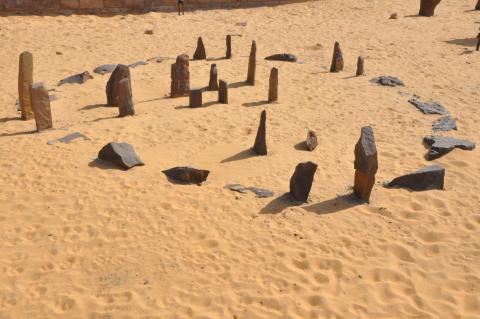 CreditThis work by Raymbetz is licensed under Creative Commons Attribution Share Alike 4.0 International
Nabta Playa Calendar Circle, reconstructed at Aswan Nubia museum - Jalali Calendar (Iran)
The Jalali Calendar was created over 900 years ago in Iran. It was introduced by a group of scholars and scientists during the rule of Sultan Jalal al-Din Malik-Shah. One of the key astronomers was Omar Khayyam, also known for his poetry.
The Jalali Calendar was a solar calendar. This means it followed the movement of the Sun, not the Moon. It was more accurate than many other calendars at the time, even more accurate than the Gregorian calendar used today.
The calendar helped people know when to plant and harvest crops. It also guided important festivals, like Nowruz, the Persian New Year. Nowruz marks the first day of spring and is still celebrated today in Iran and other countries.
The Jalali Calendar showed how science and culture worked together. It’s a great example of how astronomy helped shape daily life.
- Lunar Calendar (Hijri)
The Hijri calendar is a lunar calendar. It follows the Moon, not the Sun. This means each month begins with the sighting of a new Moon. The calendar began in the year 622 CE. This was the year the Prophet Muhammad (peace be upon him) travelled from Mecca to Medina. That journey is called the Hijra, and it marks the start of the calendar.
There are 12 months in the Hijri year. Each month has 29 or 30 days, depending on the Moon. The year is shorter than a solar year, so Islamic months move through the seasons.
The Hijri calendar is used to mark important Islamic dates. These include Ramadan (the month of fasting), Eid al-Fitr, and Eid al-Adha. This calendar helps Muslims around the world organise their religious life. It connects faith, time, and the night sky.
Image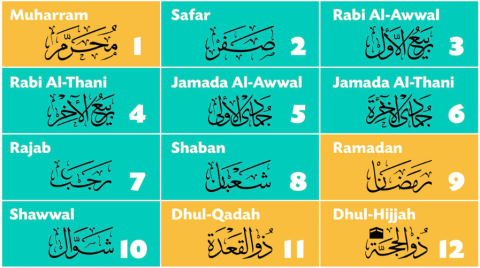 CreditThis work by The Schools' Observatory is licensed under All rights reserved
The Hijri Calendar - Stonehenge and Other Henges (UK)
Stonehenge is one of the most famous ancient sites in the world. It is found in Wiltshire, England. It was built over 4,000 years ago. The large stones are arranged in a circle. Some are lined up with the rising or setting Sun. This helps show the time of year.
On the summer solstice, the Sun rises in line with the biggest stone, known as the Heel Stone. On the winter solstice, the Sun sets between stones on the opposite side. This suggests the builders used the site to mark important solar events.
Other stone circles in the UK also link to the Sun and seasons. These include Avebury and Castlerigg. People may have used them as early calendars or for celebrations. We don’t know exactly why these henges were built. But they show us that ancient people watched the sky closely. They used the Sun’s path to measure time and plan their year.
Image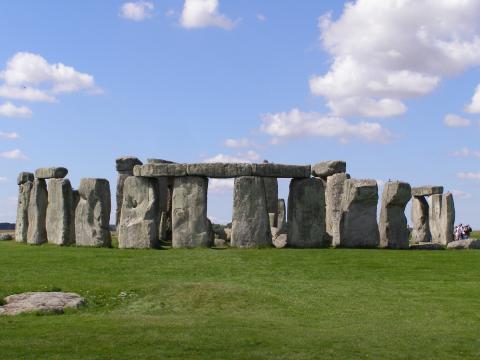 CreditThis work by garethwiscombe is licensed under GNU General Public License v2.0 or later
Stonehenge, a neolithic stone monument constructed from 3000 BC to 2000 BC - Panchangam (India)
The Panchangam is a traditional Hindu calendar. It is still used in many parts of India today. The word Panchangam means “five parts.” These five parts help people keep track of both the Moon and the Sun. They are:
- Tithi – the lunar day
- Vara – the weekday
- Nakshatra – the star or lunar mansion
- Yoga – a special combination of Sun and Moon positions
- Karana – half of a lunar day
The Panchangam is a lunisolar calendar. This means it uses both the phases of the Moon and the position of the Sun to measure time. It is used to mark festivals, plan events, and choose lucky times.
Many people check the Panchangam for wedding dates or religious ceremonies. Panchangams can be written for different regions. Each one may vary slightly based on local traditions and sky positions. This calendar shows how astronomy, timekeeping, and culture are deeply linked in India.
Image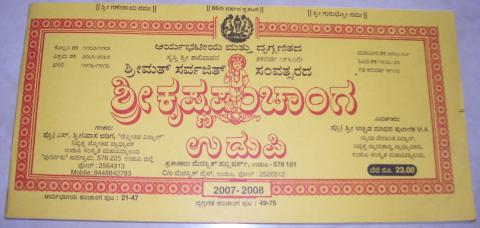 CreditThis work by Rajaramraok is licensed under GNU General Public License v2.0 or later
A traditional Kannada Panchanga calendar for 2007–2008, showing dates, festivals, and astrological details used in Hindu rituals - Namoratunga (Kenya)
Namoratunga is a group of stone pillars in northern Kenya. It is believed to be over 2,000 years old. The word Namoratunga means "people of the stones" in the Turkana language.
Researchers think the site was used for timekeeping and astronomy by the ancient Cushitic-speaking people. There are 19 stone pillars at the site. Some of them are aligned with the stars. These alignments match the seven bright star systems used by local communities to track time and plan farming seasons. These star groups include Pleiades and Triangulum.
The stars helped people decide the best times to plant and harvest crops. The stones may have worked like a calendar, helping communities follow the rhythm of the seasons.
Namoratunga is one of the oldest known examples of African sky knowledge linked to farming. It shows how people used the sky to guide daily life long before modern clocks and calendars.
Image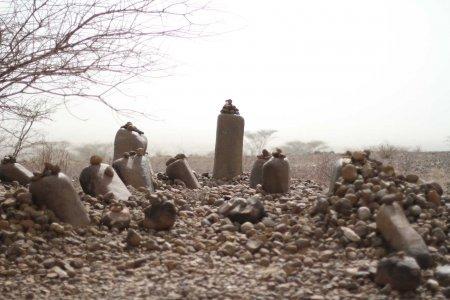 CreditThis work by Darouet is licensed under Creative Commons Attribution Share Alike 4.0 International
Stone pillars at Namoratunga in Turkana, Kenya - Beijing Ancient Observatory (China)
The Beijing Ancient Observatory is one of the oldest observatories in the world. It was built in 1442 during the Ming Dynasty. It stands on a tall platform in the heart of Beijing. From here, ancient astronomers studied the sky and tracked the movement of stars and planets.
The observatory was used for over 500 years. It helped the Chinese empire create accurate calendars and predict eclipses. On its rooftop, you can still see large bronze instruments. These include an armillary sphere, celestial globe, and sextant. Some of these tools were added later by Jesuit scientists working with Chinese astronomers.
The observatory played a big part in timekeeping and navigation in China. It also helped link astronomy and governance, as emperors relied on the stars to guide decisions and rituals.
Today, the Beijing Ancient Observatory is a museum. It shows the long history of Chinese sky-watching and its role in science and society.
Image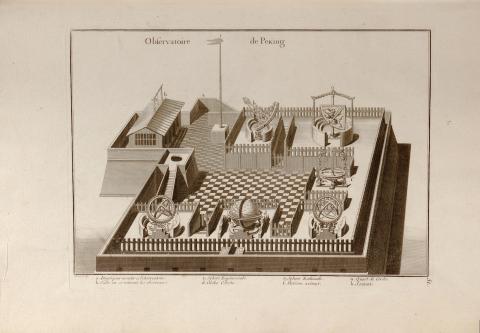 CreditThis work by Anville, Jean Baptiste Bourguignon d' is licensed under GNU General Public License v2.0 or later
An old illustration of the Beijing Ancient Observatory, showing a rooftop platform with large bronze astronomical instruments such as armillary spheres, quadrants, and celestial globes - Maya Calendar (Central America)
The Maya civilisation had one of the most advanced calendar systems in the ancient world. It was used by the Maya people in Central America more than 1,000 years ago. They used three different calendars at the same time. Each one had a special purpose:
- Tzolk'in: A 260-day calendar used for religious and ceremonial events. It combined 20 day names with 13 numbers.
- Haab': A 365-day calendar used for farming and daily life. It had 18 months of 20 days, plus 5 extra days at the end.
- Long Count: This calendar tracked long periods of time. It was used to record historical events and big cycles in Maya history.
The Maya believed that time was cyclical, not linear. This means they saw time as repeating in great cycles, like the seasons.
In 2012, some people wrongly thought the Maya predicted the end of the world. In fact, their Long Count calendar was simply ending one cycle and starting another, just like turning a page.
The Maya calendars show how deeply they understood the sky, maths, and time. Their system was more accurate than many other ancient calendars.
Image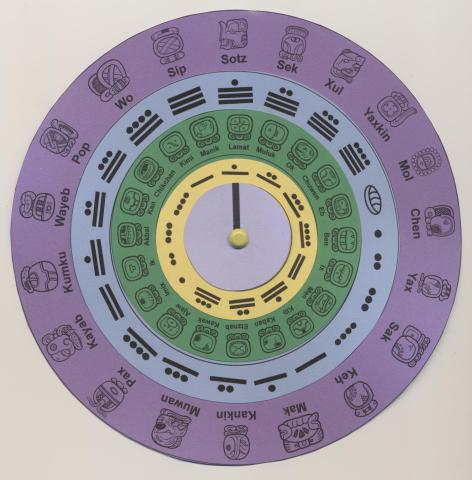 CreditThis work by Croppy Peace Sign is licensed under Creative Commons Zero v1.0 Universal
Tzolkin calendars printed on colored construction paper - Gregorian Calendar (Western World)
The Gregorian calendar is the one most of the world uses today. It was introduced by Pope Gregory XIII in 1582. This calendar was created to fix errors in the older Julian calendar.
The Julian calendar had made the year slightly too long. Over time, the dates of seasons and festivals began to drift. The Gregorian calendar fixed this by changing how leap years work. It removed 3 leap years every 400 years. This helped keep the calendar in line with the Earth’s orbit around the Sun.
The new calendar also helped to set the date for Easter more accurately. This was very important to the Christian Church. Not all countries accepted the change right away. Some places, like Britain and its colonies, didn’t adopt the Gregorian calendar until 1752. When they did, they had to skip 11 days to catch up!
Today, the Gregorian calendar is used for most business, travel, and global communication. It is based on the solar year and has 12 months with 365 days, plus a leap year every four years (with a few exceptions).
Image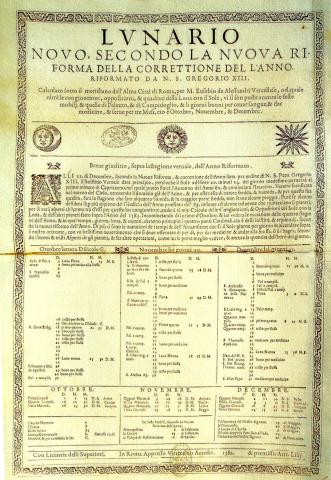 CreditThis work by Biblioteca del Vaticano is licensed under GNU General Public License v2.0 or later
Printed in Rome by Vincenzo Accolti in 1582, one of the first printed editions of the new Gregorian calendar - Roman Calendar (Ancient Rome)
The Roman calendar is one of the earliest systems used in Europe. It went through many changes over time. The first version had 10 months and only 304 days. The year started in March and ended in December.
That’s why some months still have names like “September” (which means 7) and “October” (which means 8), even though they are now the 9th and 10th months. Later, two months were added: January and February. This made the calendar closer to the 12-month system we use today.
The calendar was still not very accurate. It did not match the Earth's journey around the Sun. So, Julius Caesar reformed it in 46 BCE, creating the Julian calendar. The Julian calendar had 365 days and a leap year every four years. It was more reliable and used across the Roman Empire. Over time, small errors in the Julian calendar added up. This led to the Gregorian calendar we use today.
Image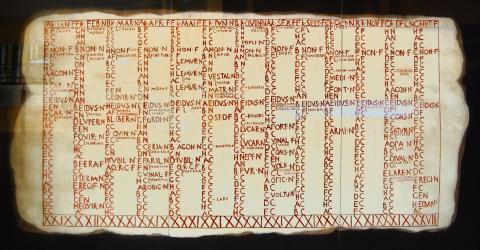 CreditThis work by Bauglir is licensed under Creative Commons Attribution Share Alike 4.0 International
A reproduction of the Fasti Antiates Maiores, a painted wall-calendar from the late Roman Republic - Druidic Lunar Calendar (Celtic, UK)
The ancient Celts are thought to have followed a lunar calendar. This calendar was closely linked to nature, farming, and seasonal cycles. Druids were Celtic priests, scholars, and astronomers. They may have used the Moon’s phases to mark time. A new month likely began with the New Moon.
The year was divided into two main parts: the light half and the dark half. These were marked by key festivals like Beltane in spring and Samhain in autumn. These events signalled changes in the seasons and were important for farming and spiritual life.
The Druids may have also used trees to track time. This is known as the Celtic Tree Calendar. Each tree represented a different time of the year and had its own meaning. For example, the oak tree was linked to strength and summer.
Although no written records from the Druids survive, much of what we know comes from later sources and archaeological sites like Stonehenge, which may have helped mark lunar and solar events.
The Druidic lunar calendar shows how early cultures connected the Moon and nature to their way of life.