
People have watched the night sky for thousands of years. This inspired beliefs and stories worldwide. It helped plan travel and farming. Calendars were made by tracking changes in the sky above.
Human life was guided by celestial events, like the phases of the Moon and the changing seasons. Cultures created their own ways to mark these important times. While celebrations may have evolved since then, the deep ties between our lives and astronomy remain.
This section explores some of these sky-inspired festivities. It shows how celestial observations unite communities and connect us to the natural world.
- Solstice
The Sun follows the same path across the sky. But the height of this path changes throughout the year. A solstice occurs when the Sun reaches its highest or lowest point. This also coincides with the longest and shortest days of the year in many countries around the world.
There are 2 solstices per year. These are often called the "summer solstice" and the "winter solstice". For the Northern hemisphere, the summer solstice is in June and the winter solstice is in December. This is opposite to the Southern hemisphere.
Another important transition is the equinoxes. These are days when the amount of daylight and nighttime is about equal. The solstices and equinoxes can mark the change between seasons.
Image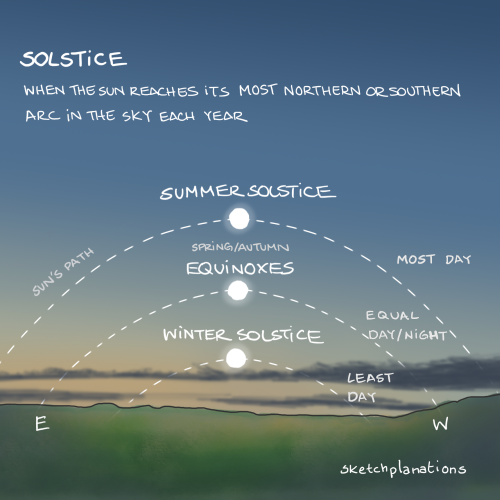 CreditThis work by Jono Hey (Sketchplanations) is licensed under Creative Commons Attribution Non Commercial 4.0 International
In the past, many cultures have placed great importance on the Sun. It is essential for life on Earth. People created ways to track the Sun’s movement and record the passage of time, which was helpful in agriculture.
This is why the solstices were — and still are — a significant event. Lots of cultures celebrate holidays around these times. They are usually themed around harvests, livestock, and food.
Midsummer is a celebration marking the summer solstice. It is traditionally observed in Europe. Festivities usually take place outdoors and can include lighting bonfires, playing music, and dancing.
The Dongzhi Festival in China marks the winter solstice. It occurs on the longest night of the year. The festival celebrates the longer daylight hours, which is believed to bring more positive energy. Families gather and pay respects to their ancestors. They also eat and share foods such as dumplings and tangyuan (a Chinese dessert).
- Beltane
Beltane is a seasonal festival. It occurs on the 1st of May. This is about halfway between the March equinox (spring/vernal equinox in the Northern hemisphere) and the summer solstice. This marked the start of summer in many cultures.
In the past, Beltane was observed by the Gaels (a group of Celtic people) across Ireland, Scotland, and the Isle of Man. Communities celebrated the new season and the light and growth it would bring. Festivities included cleansing and protection rituals, decorating homes with May flowers, and sharing food and drink.
But the most important custom was lighting Beltane bonfires. People used to walk around these and even leap over them! Livestock would be herded between the bonfires when moving to the summer fields. Each household put out the fire in their hearths and then relit them from the bonfires.
In this way, communities were brought together.
Celebrations decreased over time. However, some modern versions of the event – inspired by the old festivities – still occur today. One example is the Beltane Fire Festival. This has taken place in Edinburgh, Scotland, since 1988.
Image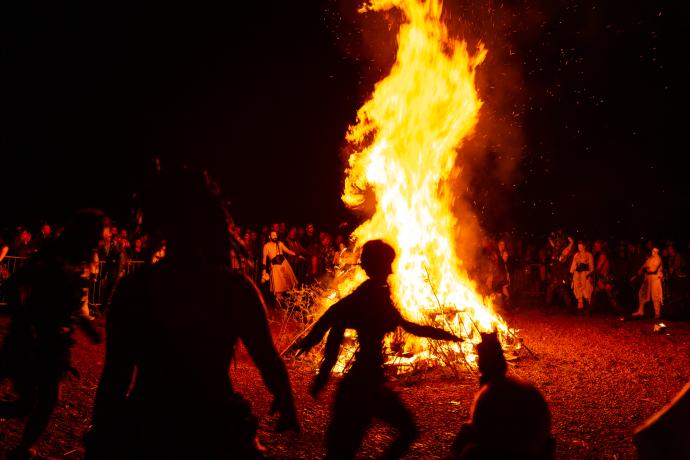 CreditThis work by Beltane1 is licensed under Creative Commons Zero v1.0 Universal
Celebrations at Beltane Fire Festival in 2019 - Samhain
Samhain is a seasonal festival. It occurs on the 1st of November. This is about halfway between the September equinox (autumnal equinox in the Northern hemisphere) and the winter solstice. This marked the end of the harvest period and the start of winter.
In the past, Samhain was observed by the Gaels (a group of Celtic people) across Ireland, Scotland, and the Isle of Man. Livestock was moved into the winter fields, bonfires were lit, and feasts were shared in the community.
Samhain divides the lighter half of the year – with longer daylight hours – from the darker half. People thought this meant the division between our world and the "Otherworld" was at its weakest. They offered food and drink to the spirits, set places at tables for past relatives, and tried to protect themselves against harm.
Part of this involved dressing up in costumes and masks as a disguise. This later included knocking on the doors of nearby houses, saying verses, and receiving food in return.
Samhain may have influenced modern-day Halloween celebrations.
- Nowruz
Nowruz (meaning "new day") is the Persian New Year. It is the first day of the Iranian calendar. This occurs on the March equinox, usually somewhere between the 19th and 22nd of March. It marks spring starting in the Northern hemisphere.
With the dark winter months over, Nowruz is about new beginnings and the renewal of nature that the warmer weather brings. It has been celebrated for over 3,000 years and can be traced back to Zoroastrianism, an Iranian religion that is one of the oldest in the world. This meant it was mostly observed by Iranian people in the past.
Nowruz has now developed into a secular (non-religious) festival. But it remains an important day in many faiths. It’s celebrated by millions of people across different countries.
Festivities happen over 13 days. The customs involved vary between cultures and regions, but there are similarities.
Homes are cleaned as Nowruz approaches. This symbolises getting rid of the old to make way for a fresh start. People also buy new clothes.
Another common custom is fire and water rituals. In Iran, a celebration happens on the Wednesday before the New Year. Fireworks are set off. People light bonfires and jump over them. This is thought to cleanse and invite spring’s warmth into their lives. In Azerbaijan, they celebrate on each Tuesday during the month before Nowruz. Each of the 4 celebrations focuses on an element – water, fire, earth, and air.
Food is also a big part of the celebrations. Special meals are cooked and shared with family and friends. In some communities, this might involve rituals, such as singing songs together while cooking.
Regions might have their own unique dishes. But samanu (also known by other names) is popular across many cultures. This is a sweet pudding with a paste-like consistency. It's made from wheat.
Samanu is included in the Haft Sin table. This is an arrangement of 7 items that all begin with the Persian letter “s”. Each item represents aspects of life. Samanu is linked to richness and fertility. Different communities may display other foods instead and might decorate the table in various ways.
Image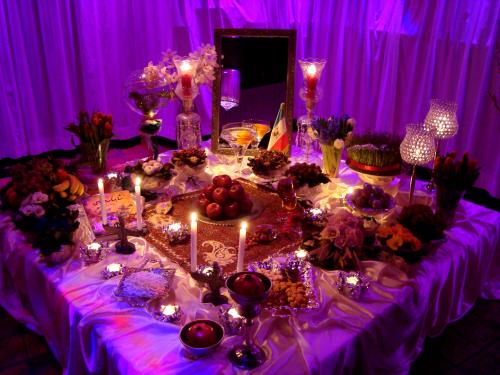 CreditThis work by PersianDutchNetwork is licensed under Creative Commons Attribution Share Alike 4.0 International
Haft Sin Table Other customs include celebrating the arts with poetry recitations and music performances. Or festivals and parades in public streets.
But however Nowruz is observed, it brings together family, friends, and the community. It unites people across cultures.
- Lunar New Year
The Lunar New Year marks the start of the lunar calendar. It usually occurs in January or February, depending on which version of the calendar is used.
This event is observed across cultures and regions worldwide. It’s most popularly associated with China, though variations happen throughout East Asia. Many of these countries follow the Chinese calendar. This is based on the Sun’s movements and cycles of the Moon. However, other places (such as Tibet or Mongolia) may follow their own lunar calendars.
Festivities differ between regions. But there are some common customs and themes.
The Lunar New Year always begins on a new moon. This is related to rebirth and renewal. It falls after the winter solstice and, in the past, marked the start of preparations for planting food crops. This is because the daylight hours are increasing. Light is further celebrated in China with a lantern festival. It takes place about 2 weeks after the new year, on a full moon.
Image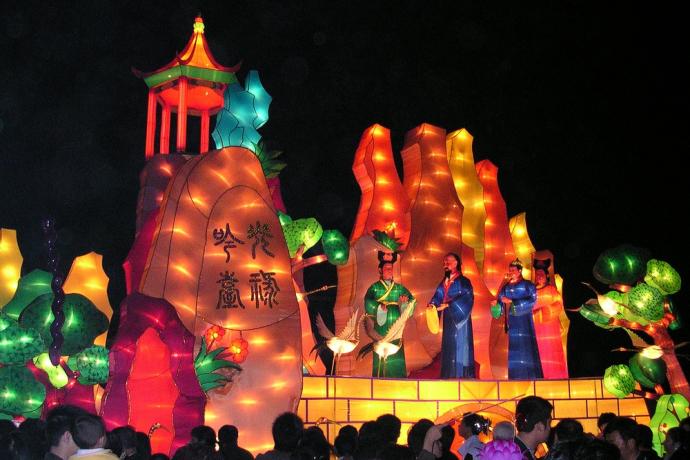 CreditThis work by Jack Parkinson is licensed under Creative Commons Attribution 4.0 International
The Chinese New Year Lantern Festival (2007) in Fuzhou In many cultures, homes will be cleaned before the new year begins. This symbolises getting rid of the old and making way for the new. It is called “sweeping away the dust” in China. Homes are then decorated in various ways. This includes flowers in warmer countries where they have bloomed. Peach and apricot blossoms are commonly used in Vietnam.
Family is an important theme, too. People visit relatives and share meals together. Great respect is placed on elders. They also honour their past ancestors with special rituals and traditions. Many cultures give offerings of food and drink.
Lots of customs also focus on protection against bad spirits. This may be traced back to a Chinese story about Nián, a monster who attacked villages when the year was over. It was discovered that the colour red, bright light, and loud noises could scare the monster away. These ideas can be seen in festivities across different places. Many celebrations include firecrackers, fireworks, loud music or noises, lamps, candles, and red decorations or clothing.
Whilst misfortune is banished, prosperity and good luck are welcomed. One way this is observed is through exchanging gifts and money. In some countries, money is given in red envelopes.
Lunar New Year unites communities in celebration. It shows the close links between people and cycles of the natural world. The festivities are a reminder that lightness will always return after the dark.
- Diwali
Diwali is a festival of lights. It marks the start of the Hindu new year. The timing changes each year because the Hindu calendar is based on the Moon. But it usually happens sometime between October and November.
In the past, Diwali was a Hindu celebration. Now the festival is observed by people of many faiths. It is the biggest public holiday of the year in India.
Each culture and religion may link a different story to Diwali. In Hinduism, it marks when the deity Rama defeated a demon king called Ravana. Rama then returned home with his wife (the goddess Sita) and his brother (Lakshmana). Lamps were lit along the path so they could find their way, even in darkness.
The idea of light overcoming darkness is common across cultures. This is why hanging clay lamps, known as diyas, is so popular. They symbolise good winning against evil or knowledge surpassing ignorance. For Hindu people, they are reminders of the lights that led Rama and his family home. Some also believe that the lamps will invite Lakshmi, the Goddess of wealth and fortune, into their homes.
Diwali celebrations happen across 5 days. The third day is the main day of the festival and falls on the new moon. It is known as "the darkest night of the year".
Before this, homes, workplaces, and temples are cleaned and decorated. The bright lamps are hung up. People also create intricate patterns (rangolis) using materials like coloured sand and petals.
Image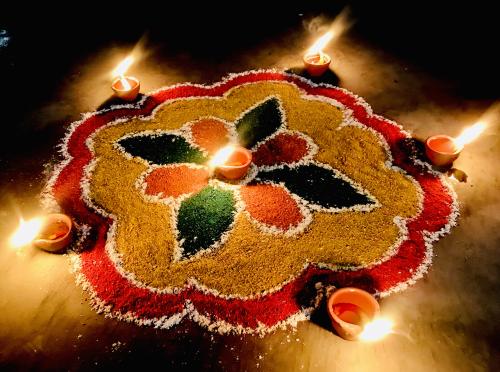 CreditThis work by Nitesh Gill is licensed under Creative Commons Attribution Share Alike 4.0 International
Rangoli Worship is another important custom, and offerings to various deities may be made. The rituals involved depend on the culture and religion.
On the third day, families come together to pray. They put on their best clothes and go out in the evening to share food and watch fireworks.
Over the following days, family members and friends exchange gifts. Some communities cook meals and share them with each other. The bonds between siblings are celebrated, with brothers visiting their sisters and her family to eat food together.
Diwali unites people of many backgrounds and religions, strengthening ties within a community.
- Matariki
Matariki is a star cluster visible in New Zealand’s night sky almost all year round. It is more commonly known as the Pleiades.
During May, the cluster sets below the horizon and disappears from view. It can only be seen again about a month later. This occurs at mid-winter for the southern hemisphere.
Seeing Matariki marks the start of a new year for many Māori people. It appears in the east just before sunrise. When this happens, a special ceremony takes place. This is commonly called hautapu and involves 3 parts.
First, the cluster is looked at in detail. Its brightness, colour, clearness, and distance to other objects in the sky (like stars) give clues about upcoming months.
People then pay respects to those who have died in the previous year. Their names are called out, and prayers are said.
Lastly, food is offered to the stars. Each of the visible stars in the cluster has its own association in Māori culture. These include food from above and food from below. Chosen offerings might include crops from the soil (such as potatoes or carrots) and food from above ground (such as birds or berries). Other stars in the cluster are linked to freshwater and the ocean. So, People may also choose fish from these sources as offerings.
The food is wrapped up and cooked on hot stones before the ceremony. It's uncovered at the end, and the rising steam feeds the stars.
Celebrations then happen over the following days.
In the past, the Māori New Year was a time when winter preparations were finished. Food had been harvested and carefully stored away. The cold weather meant no work could be done, so people were free to gather with family and friends. They reflected on the past year, shared stories, and looked forward to the future.
This is still true today. Though Matariki celebrations decreased over time, Māori people and organisations have more recently brought attention to their culture. Matariki was made a public holiday in New Zealand in 2022. Many community festivals and events take place across the country. This includes cultural performances, concerts, and light and art shows.
Image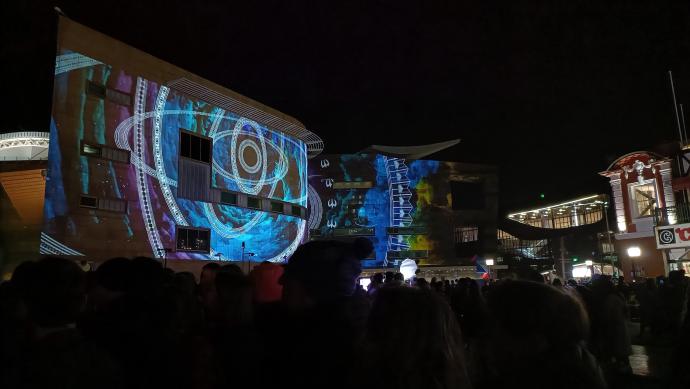 CreditThis work by L Maule is licensed under Creative Commons Attribution Share Alike 4.0 International
Public Matariki celebrations in Wellington, New Zealand - Tanabata
Tanabata is a festival celebrated in Japan for hundreds of years. It was inspired by the QiXi Festival in China and is based on the same Chinese legend.
The story is about two lovers, represented by the stars Vega and Altair. These are known as Orihime and Hikoboshi in Japanese. The pair are separated by a heavenly river (the Milky Way). They can only meet once per year, on the 7th day of the 7th month.
This is the 7th of July in the modern Gregorian calendar. However, lunar calendars were used in the past, which gives an August date (the exact day changes each year). This is why celebrations take place on different dates across Japan.
People decorate with colourful streamers and lanterns, which can be seen on homes, schools, businesses, and even in the streets. Larger festivals may take place in more populated areas. These might include outdoor food and game stalls, parades, and performances.
But the most popular custom is the writing of wishes. These are written on strips of paper called tanzaku. There are 5 different colours to choose from. Each has its own meaning (like red to express gratitude, or yellow for relationships). The wishes are then tied to bamboo trees in the hopes that they’ll come true.
Image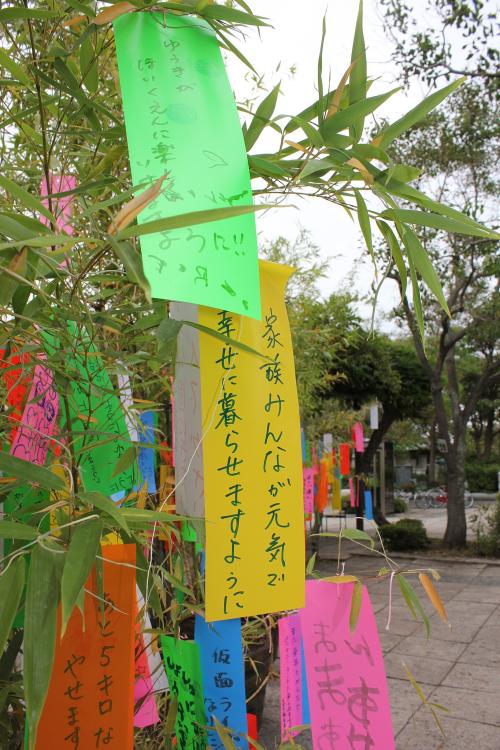 CreditThis work by Laika ac is licensed under Creative Commons Attribution Share Alike 4.0 International