
Benjamin Banneker
Occupation
Astronomer, Almanac Author, Mathematician, Surveyor
Year Born
1731
Research Areas
Solar Eclipses, Tides, Movement of the Sun and Moon, Planetary Motion

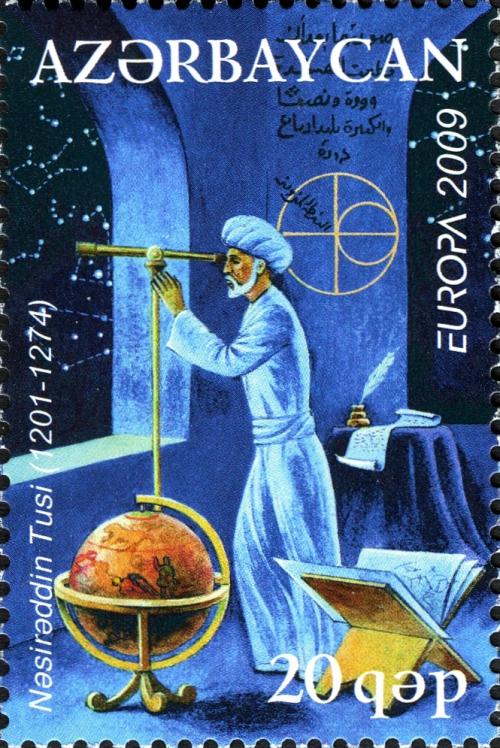
Nasir al-Din al-Tusi
Occupation
Astronomer, Mathematician, Philosopher, Scientist
Year Born
1201
Research Areas
Planetary Motion, Star Maps, Trigonometry, Logic, Ethics
Crewed Missions
Humans have been travelling to space since the 1950s.
We have used telescopes to study space for centuries, but it was the invention of massive rockets which finally let us explore space in person.

The First Discoveries
For hundreds of years, people have wondered if there were planets outside our Solar System.
This idea has now become real, thanks to huge leaps in technology. We are now able to search for these exoplanets.

Valentina Tereshkova

Helen Sharman

Yuri Gagarin

Neil Armstrong

Buzz Aldrin

Firsts in Space
The journey to space didn’t start with humans. Before astronauts, animals were sent to test if living things could survive the trip. From fruit flies to dogs, these animals played a key role in space exploration. Some, like Laika the dog, became famous for their bravery.
