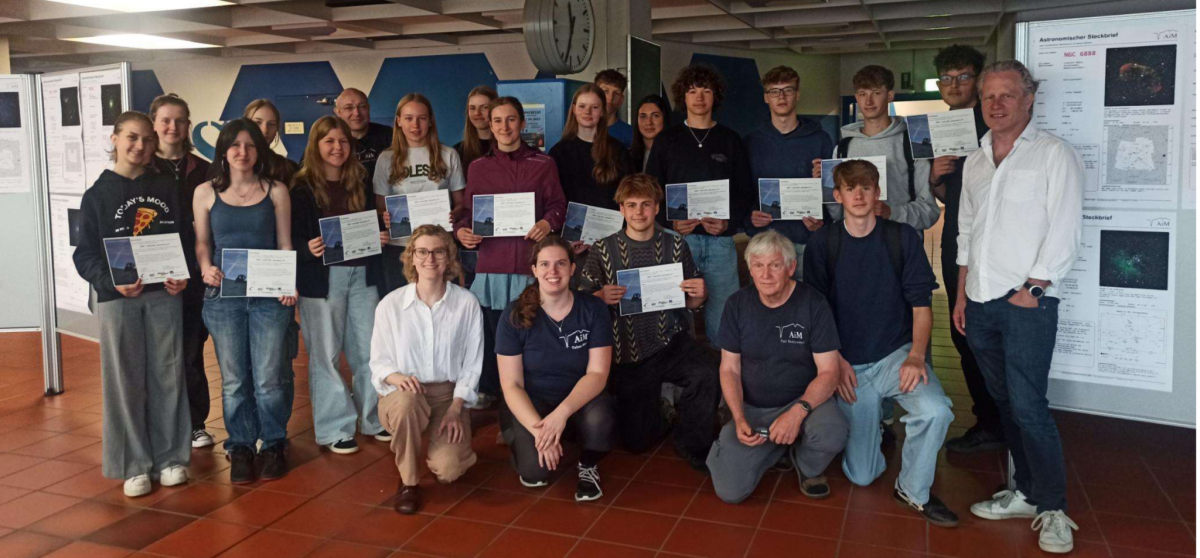
Schools: 10 schools in Münster, Germany
Students: 17 students (10 girls, 7 boys)
Partners: Astronomy and Internet in Münster (AiM); Institute for Planetology, University of Münster
In June 2025, 17 students joined a one-week astronomy camp. The aim was to help young people explore space using real telescopes.
During the camp, they worked with 26 robotic telescopes from The Schools’ Observatory. They even used the Faulkes Telescope North in Hawaii. This telescope sits on a high mountain and has a huge 2-metre mirror.
The students chose their own objects to observe. They planned their work, requested images, and learned how astronomers study the night sky.
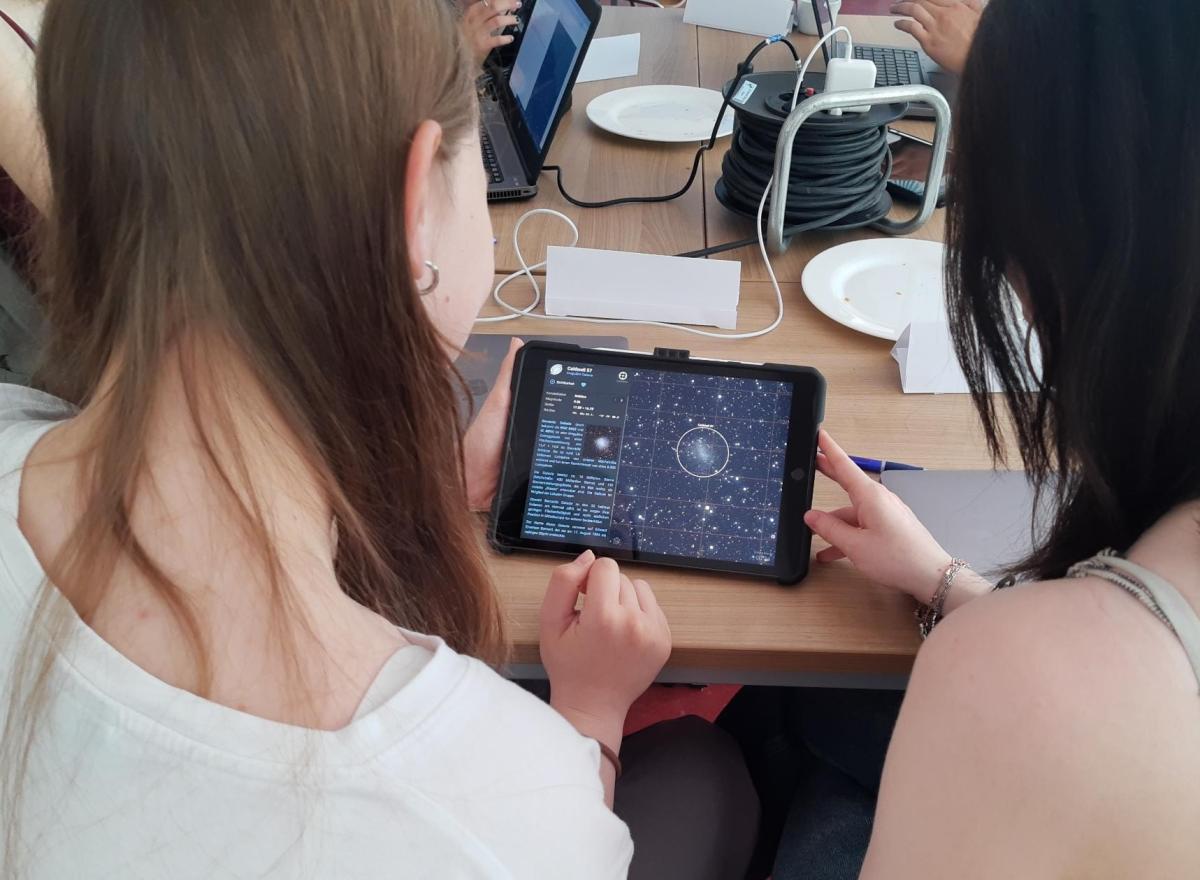
The group collected many images of galaxies, nebulae, and star clusters. They picked their favourite pictures and wrote short texts to explain what the images showed.
All of this became a public exhibition called “Beyond the Horizon.” The exhibition opened on 27 June 2025 at the University of Münster. It showed 23 images, including the Dumbbell Nebula, the Saturn Nebula, and the dwarf galaxy Caldwell 57. The display stayed open until 13 July 2025. Many families, teachers, and visitors came to see the work.
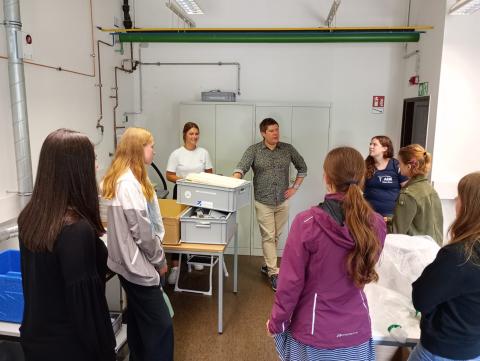
Students also visited research labs. They watched experiments about comets and ice. They spoke with scientists and learned how real research is done.
The project helped students to use real research tools, build confidence in science, learn how to collect and study data, and share their work with the public. Many students said the camp made them more interested in astronomy. They enjoyed taking part in something real and showing their results to others.
Beyond the Horizon exhibition showed how powerful hands-on science can be. With support and simple tools, young people explored the Universe and shared their discoveries. The project helped them see new possibilities for learning and their future.