The Schools' Observatory News
October 2026

World Space Week 2026: Rocket Revolution!
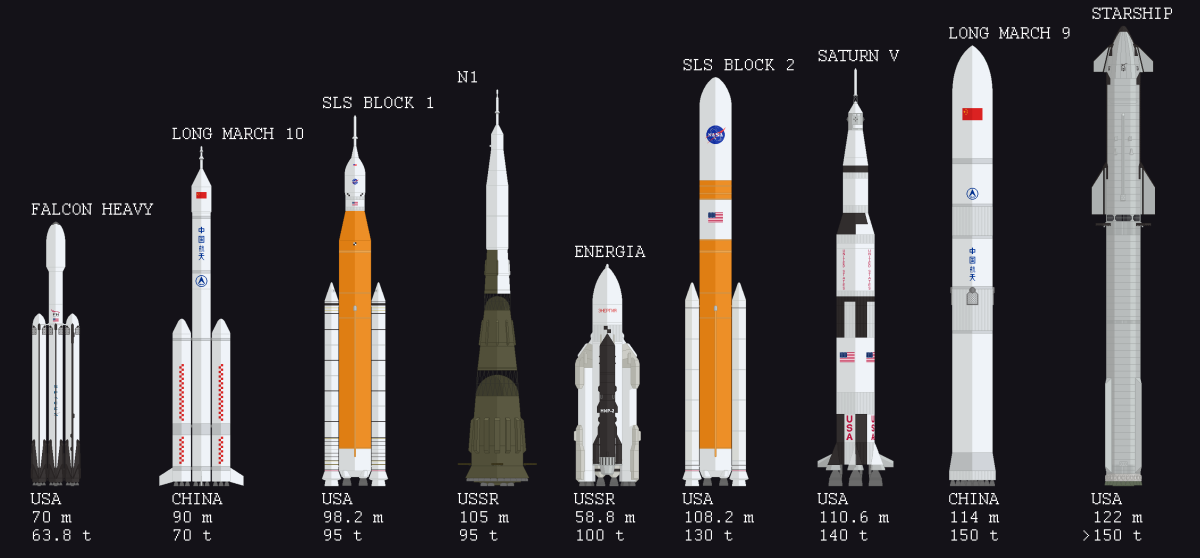
From 4th – 10th October, people around the world will celebrate World Space Week, the annual celebration of space science and technology. This year’s theme, Rocket Revolution, explores how the way we reach space is changing.
Rockets have come a long way since the early days of the Space Age. Today, reusable rockets, new launch technologies and a growing number of organisations and countries are making space more accessible than ever before. It is a great opportunity to get students thinking about how we get to space, what happens once we are there, and why space exploration matters.
Why not bring the Rocket Revolution into your classroom with some of our free resources?
- Let’s Explore Rockets! – Introduce younger learners to rockets and explore how they help us travel into space.
- Rockets Quiz – Put your students’ rocket knowledge to the test with a quick classroom quiz.
- How Do Satellites Stay in Orbit? – Discover why satellites do not simply fall back to Earth and explore the science behind an orbit.
- Space in Your Life Game – Find out just how much we rely on space technology in our everyday lives.
- You Decide! Should We Explore Space? – Get students thinking, discussing and weighing up different reasons for exploring space.
- Risk of Human Space Exploration – Get students to watch this video to learn about the risks involved in leaving and returning to Earth.
World Teachers Day!
On 5th October, we celebrate World Teachers’ Day and the incredible work teachers and educators do every day to inspire curiosity, build confidence and help young people discover what they are capable of.
This year is particularly special, as 2026 marks 60 years since the adoption of the 1966 ILO/UNESCO Recommendation concerning the Status of Teachers. The anniversary is a chance to recognise the importance of teachers and the support they need to continue making a difference.
Here at The Schools’ Observatory, teachers are at the heart of what we do. Your ideas, feedback and experiences help us shape our resources and make astronomy accessible to more young people. So, this World Teachers’ Day, we simply want to say thank you!
And remember, we are here to support you too. Explore our free CPD courses to build your confidence in teaching astronomy, visit Get Inspired for ideas and experiences from other educators, or discover our growing collection of classroom-ready Things To Do.
International Geodiversity Day!
On 6ᵗʰ October, International Geodiversity Day celebrates the amazing variety of rocks, minerals, fossils, soils and landscapes that make up our planet. But geology is not just an Earth story – we can see it written across the surfaces of other worlds too.
From the craters and mountains of the Moon to the rocky landscape of Mars, studying planetary surfaces can reveal clues about how worlds formed and how they have changed over billions of years. Why not take your students on a geological journey beyond Earth with some of our resources?
- Explore the Moon’s Surface – Take a closer look at lunar features, including craters, mountains and seas.
- Measure Mountains on the Moon – Use shadows and real lunar images to calculate the height of mountains on the Moon.
- What Can We See on the Moon? – Explore the Moon’s surface and learn to identify some of its most noticeable features.
- Make Your Own Asteroid Impact – Investigate how impact craters form and explore what affects their size.
You can also use Go Observing to request your own images of Solar System objects and bring the exploration of other worlds into your classroom.
Ada Lovelace Day: Celebrating Women in STEM!
On 13ᵗʰ October, Ada Lovelace Day celebrates the achievements of women in science, technology, engineering and maths (STEM). Named after the pioneering mathematician often described as the world’s first computer programmer, the day is also a chance to introduce young people to women who are shaping science today.
Our Career Heroes come from different countries, backgrounds and areas of STEM. Why not introduce your students to a few of them?
- Mae Jemison – The first African-American woman in space. An astronaut and physician who showed that the sky really isn’t the limit!
- Jocelyn Bell-Burnell – The astrophysicist who discovered pulsars and changed our understanding of the Universe.
- Dorothy Vaughan – A mathematician and one of NASA’s pioneering ‘human computers’, whose work contributed to the early US space programme.
- Mazlan Othman – Malaysia’s first astrophysicist, who went on to lead the United Nations Office for Outer Space Affairs and has encouraged more women and girls to pursue STEM.
- Nergis Mavalvala – Born in Pakistan, Nergis is an experimental physicist whose research has helped us detect gravitational waves and explore some of the biggest questions in physics.
Explore our Career Heroes to discover even more people working across astronomy, space science, engineering, computing and beyond. Your students might just find someone whose story inspires their own journey into STEM.
Join the Neptune & Triton Experiment!
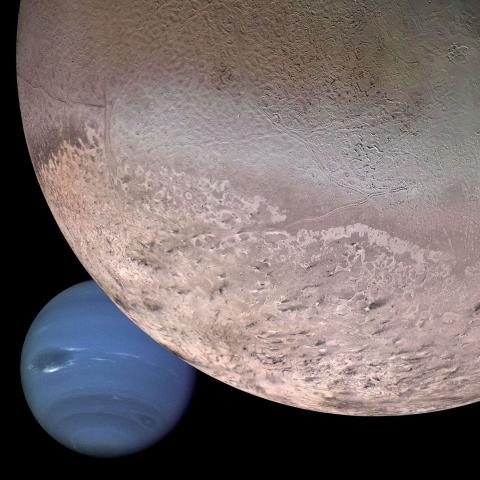
Here’s an exciting opportunity to follow 2 distant worlds across the night sky! Schools and educational groups are invited to take part in the Neptune/Triton Experiment, an international observing project running until January 2027.
The project is tracking Neptune as it moves through the constellation Pisces, while also following its largest moon, Triton, as it orbits the planet. There are lots of ways for students to get involved. You can explore real telescope images, create animations showing Neptune and Triton moving, investigate their speed and orbits, or even try calculating Neptune’s mass!
And here’s where The Schools’ Observatory comes in, you can use Go Observing and the 2-metre Liverpool Telescope to take your own images of Neptune and Triton and contribute to the experiment.
The invitation is available in 8 languages, making it a great opportunity for schools and learners around the world to take part.
Find out more and join the Neptune/Triton Experiment
Look to the Sky!
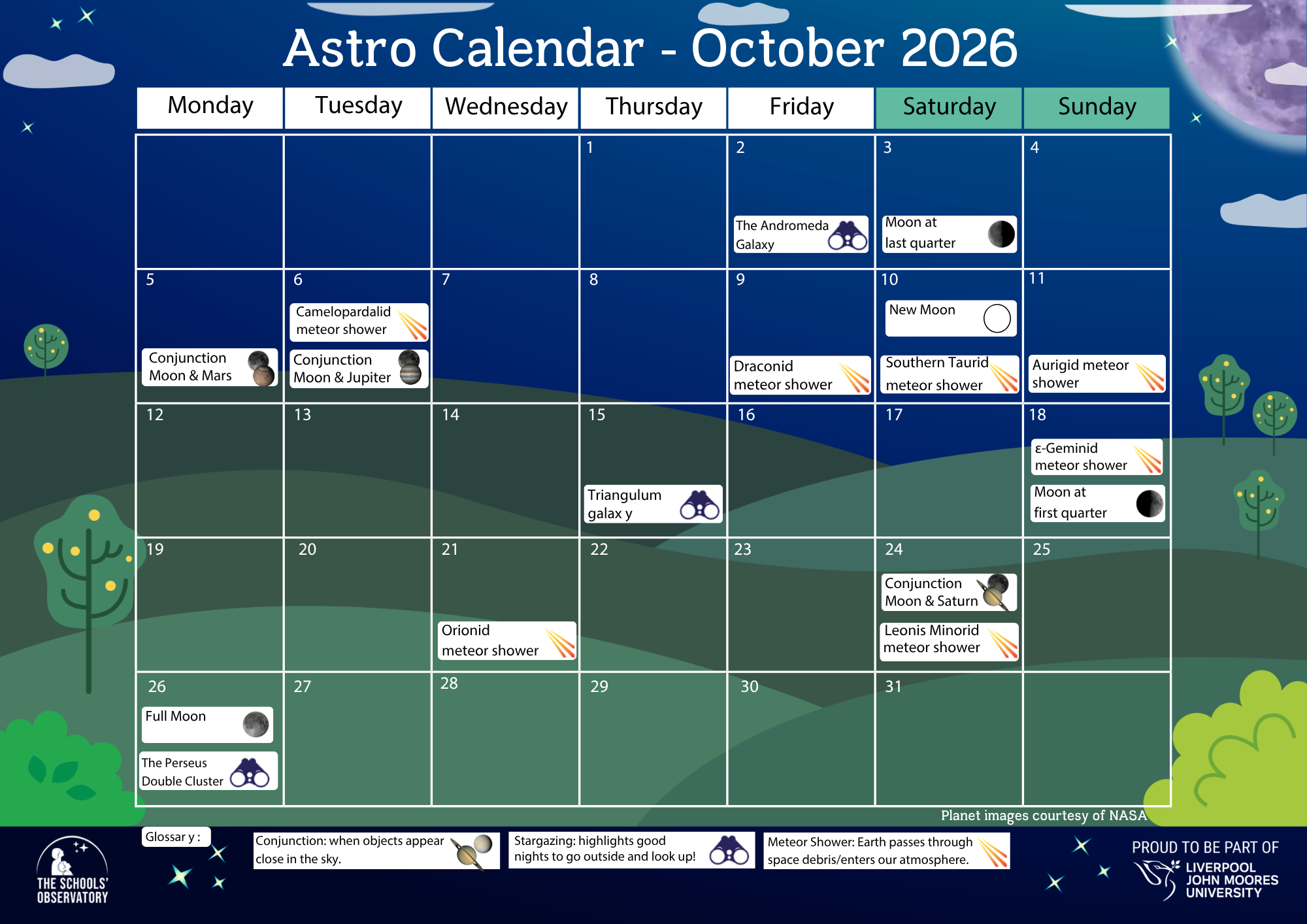
Plan your stargazing adventures with our October astronomy calendar! Download it to display at home or in the classroom. Get ready for an exciting month of celestial events, including Meteor showers and conjunctions between the Moon and some of the Solar System’s most impressive planets. Don’t miss out on what the night sky has to offer!
Download and display October's astronomy calendar!