
Let's Explore the Moon!
Next time it's dark, why don't you look up!
Even if we can't go into space we can still learn a lot about it from right here on the ground.
Use this activity pack to learn all about the Moon - let us help you explore!
Why Does the Earth Have Tides?
The level of the sea rises and falls about 2 times each day. We call these changes tides. But what causes them?
Teresa Anderson
Early Life
Teresa grew up as a hard-working and determined student. She gained a degree in physics and a masters in instrumentation and analytical science. In her class of 200, she was one of only six women studying physics. Her interests moved towards using science to overcome global challenges, especially protecting the environment and sustainability. Teresa went on to do a PhD in electrical engineering. The focus of her research was hydro power in Nepal. She then worked for a charity using technology to tackle poverty in developing countries.
Year born: 1962
Research Areas: Electrical Engineering, Renewable Energy, Public Engagement
Solstick: Example Result
We can estimate the size of the Earth by seeing how far away you are from somewhere nearer the equator where the Sun was directly overhead at the time the measurement was made. You can see how this works in detail here.
For the Solstick experiment, we collected lots of shadow stick measurements from people all over the UK.
Solstick: How it works
To measure the size of the Earth, we can use the fact that shadows cast by the Sun are different lengths in different places at the same time. If the Earth were flat, all the shadows would be the same everywhere at a particular time, but because it is curved like a ball, some shadows are longer than others.
Solstick: Measuring the Earth
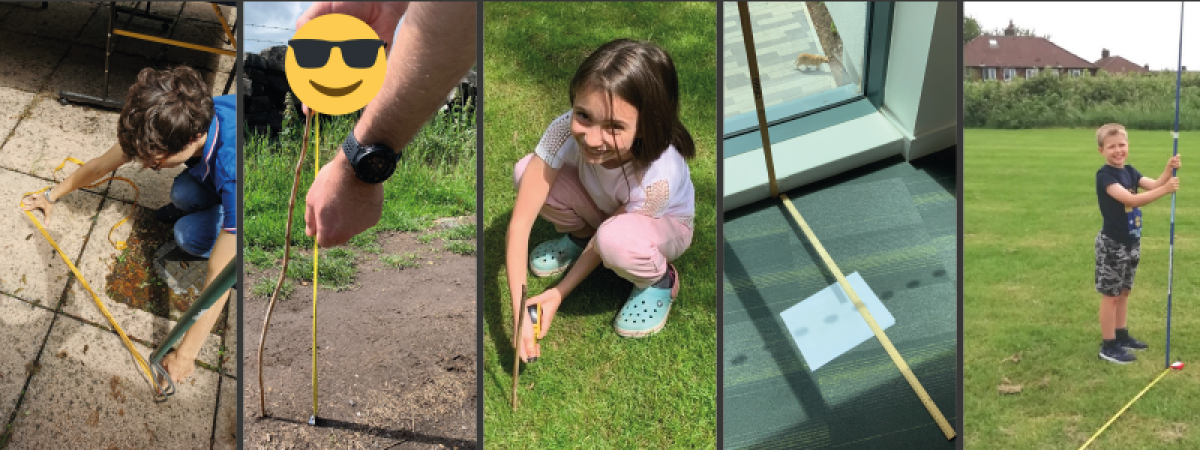
For a number of years around the Summer Solstice, the Schools' Observatory ran a national experiment to use shadow sticks to measure the size of the Earth.