
Rose Wanjiku Njogu-Mwangi
Early Life
Rose Wanjiku Njogu-Mwangi grew up in Nairobi, Kenya. She liked science at school. She also liked solving problems. She later moved to the United States. She studied at Embry-Riddle Aeronautical University in Florida. She earned a degree in Aerospace Engineering. She then earned a Master’s degree in Aeronautics.
While at university, Rose joined student groups. She worked with the National Society of Black Engineers. She helped encourage other students. She finished her studies in 2017.
Year born: Early 1990s
Research Areas: Aerospace Engineering and Space Missions
Koppillil Radhakrishnan
Early Life
Koppillil was born in 1949 in Kerala, India. He grew up in a small coastal town and liked science and maths from a young age. He also enjoyed music and dance with his family supporting these interests.
Year born: 1949
Research Areas: Electrical Engineering and Space Research
Mishaal Ashemimry
Early Life
Mishaal Ashemimry was born in the US in 1984. She spent a few years of her early life in Saudi. It was here that her interest in space began. At age 6, she felt inspired while gazing at the stars in the Unaizah desert. To feed her curiosity, she decided to learn how to build rockets so she could go to space one day.
Ashemimry has two bachelor's degrees. One is in aerospace engineering, and the other is in applied maths. She has also earned her master's in aerospace engineering. NASA has funded her research.
Year born: 1984
Research Areas: Aerodynamics
"Failure is the seed from which success grows."
Sara Sabry
Early Life
Sara Sabry was a curious child, and she has always loved space. She earned her degree in Cairo, where she grew up. Her degree is in Mechanical Engineering, with a focus on Mechatronics.
After this, she did her Master's in Biomedical Engineering, and she earned this in Italy. At present, Sabry is doing her PhD in Aerospace Sciences. Her PhD is at the UND NASA funded Human Spaceflight lab!
Year born: 1993
Research Areas: Planetary spacesuits
"Believing in myself and believing it was possible is what led me to be the first in something."
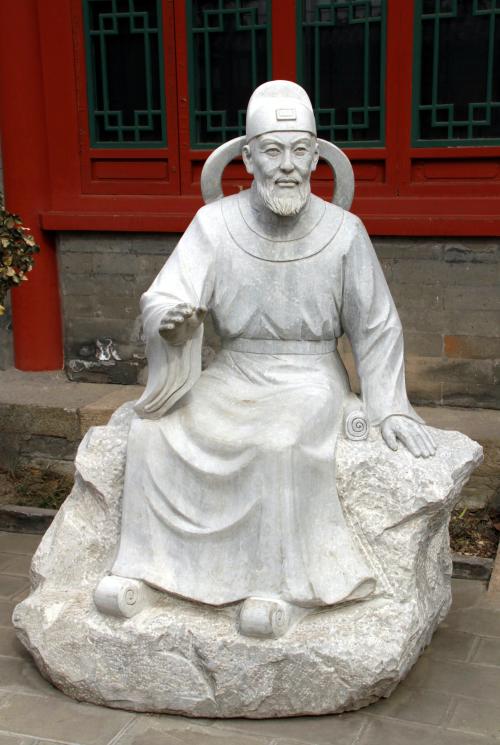
Guo Shoujing
Occupation
Engineer, Astronomer, Mathematician
Year Born
1231
Research Areas
Hydraulic Engineering, Astronomical Instruments
Space in Your Life Game
You may be aware that space exploration requires lots of technology, but did you know that some of that technology is used back on Earth to make people's lives better? Match the pairs to learn about the space technology in your life!
Space Ports
Spaceports are just like airports or shipping ports, but for spacecraft.
They are places that will launch, and maybe even land rockets.

Space Probes and Robots
Since the 1950s, humans have sent robots and space probes all over the Solar System.
The Voyager probes have even gone beyond our Solar System into open space!

Uses of Satellites
Satellites are useful in lots of ways. They look at the Earth as well as space. They also help us in our daily lives.

Satellites
A satellite is an object which orbits another. An orbit is the curved path an object in space takes around another.
