Astronomy for Remote and Island Schools (AfRIS) was a two-part STFC-funded project to create and manage a small mobile outreach team. The team would deliver astronomy and STEM-related activities to schools in some of the UK’s more remote and island communities.
Over the course of both projects, we interacted with over 5,560 students and 1,100 adults in 104 remote communities. These were as far south as Jersey to as far north as Unst in the Shetland Isles. AfRIS also served as a platform for researching the best model to improve astronomy education and support STEM clubs in remote areas.
- AfRIS : 2017 - 2020
- Image
 CreditThis work by The Schools' Observatory is licensed under All rights reserved
Project Goal:
To deliver astronomy workshops to remote and island schools by way of a small mobile outreach team.
Duration:
30 months
from Sep 2017 to Feb 2020
Target audience:
Schools in geographically remote and island communities across the UK.
Funders and partners:
Science and Technology Facilities Council (STFC), Liverpool John Moores University.
Project Summary:
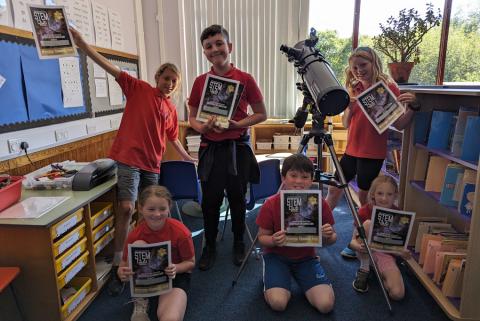
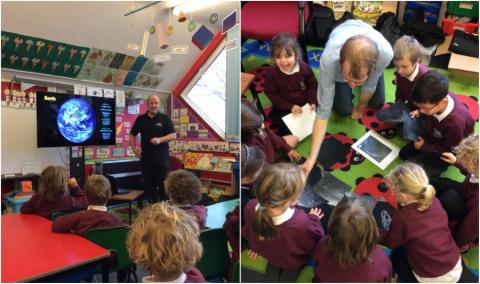
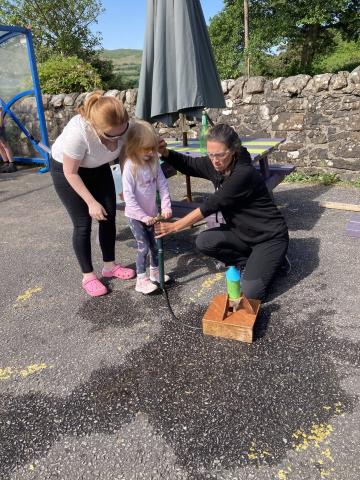
From 2017 to the end of 2019, the team took 40 trips to remote and island communities across the UK. They visited 80 schools and engaged with 6,289 pupils and adults. Each visit involved a full day of astronomy-related activities. These included making star wheels and planet models, and building and launching rockets. Schools even took images with our robotic telescope and looked at the data. On average, we spent 3 hours with each group. This provided a solid introduction to the exciting world of astronomy. We shared our passion for STEM with an enthusiastic, grateful audience.
The project budget of £93K meant the average per-head cost for those we engaged with was £14.82. This is a fraction of the cost of taking them to science centres and museums.
Impact:
- Visited 81 schools during 40 trips.
- Hosted 16 after-school community events.
- Engaged with 5,236 pupils and 1,053 community members.
- Average pupil contact time of 3 hours for talks and hands-on activities.
- Feedback: teacher rating 4.69 out of 5, pupil rating 4.56.
- Feedback: 81% of pupils reported increased interest in STEM.
Highlights:
- Visiting welcoming, keen and grateful communities across the British Isles.
- Reports in lots of community news sources and appearing on Channel Islands TV.
- Travelling to parts of UK that few get to visit, with too many adventures to mention.
- Many modes of travel including car, bus, train, ferry, plane and even tractor!
- Visited many stunning parts of the UK, as shown below:
Image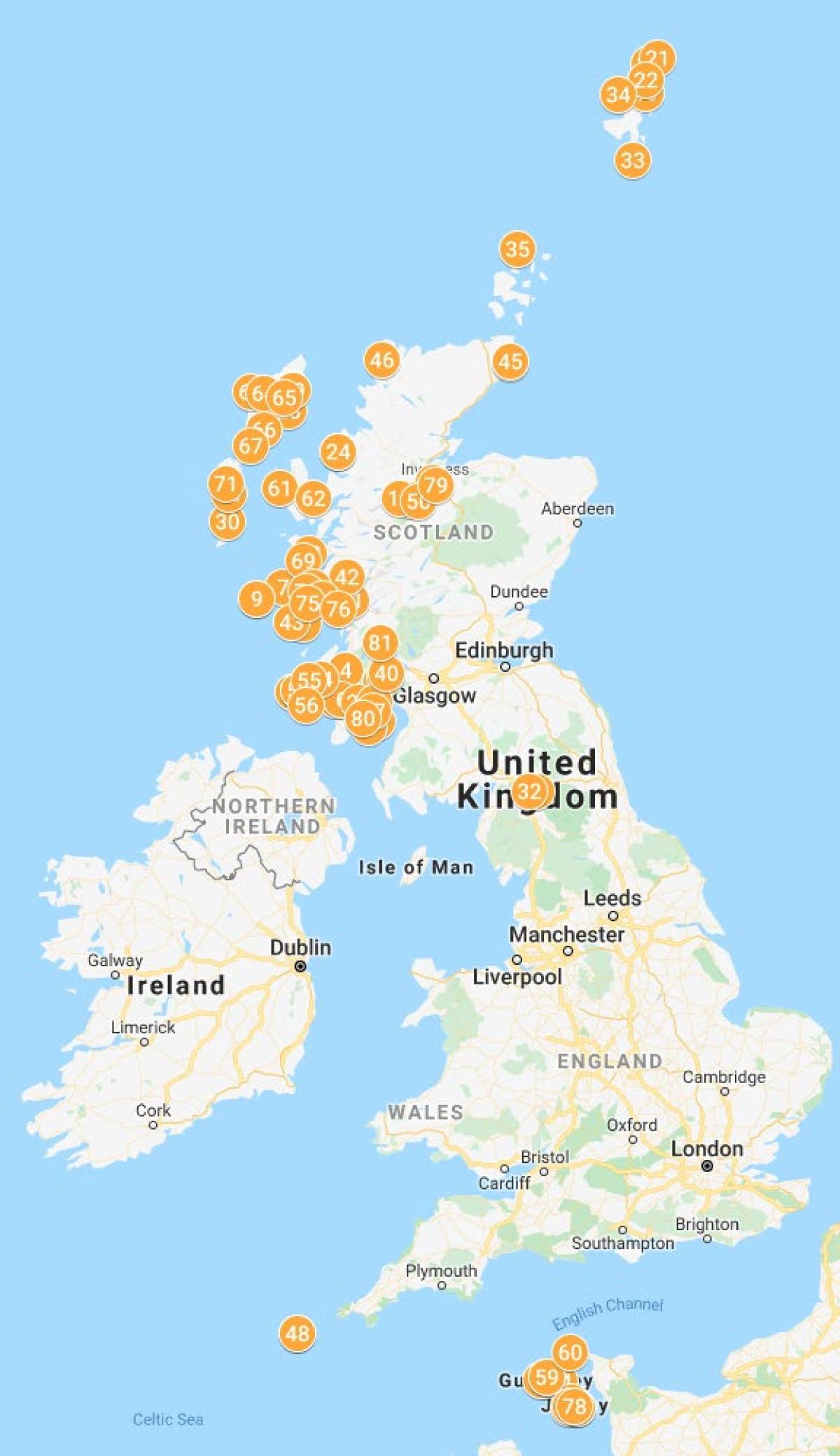 CreditThis work by The Schools' Observatory is licensed under All rights reserved
 - AfRIS STEM Clubs : 2022 - 2024
- Image
 CreditThis work by The Schools' Observatory is licensed under All rights reserved
Project Goal:
To support remote and island schools in running STEM clubs for their pupils. Done through in-person visits, online workshops and remote learning.
Duration:
24 months
from Nov 2022 to Nov 2024
Target audience:
School and community STEM Clubs in geographically remote and island communities in Scotland.
Funders and partners:
Science and Technology Facilities Council (STFC), Liverpool John Moores University
Project Summary:
AfRIS STEM Clubs was funded as a legacy project of the original AfRIS project. It saw the mobile outreach team come together to support 23 school- and community-based STEM Clubs across the Highlands and Islands of Scotland. This support mainly involved in-person visits, as well as remote video sessions and online support materials. Over the project, we engaged with 330 pupils. They worked through six fortnightly STEM activities in our own booklets, each lasting an hour.
An important part of the project was to trial different levels of support with schools. This would help to determine a best-practice method for providing STEM Club support to remote and island communities. The project budget of £58K meant we offered support to clubs at £175 per head, or £29 per visit, which is a fraction of the cost of each travelling to mainland science centres or museums.
Impact:
- Provided support to 330 pupils in 23 STEM Clubs.
- Six hours worth of hands-on STEM activities for each person.
- Researched and found a best practice STEM Club support model.
- Increased confidence of 23 teachers to deliver STEM Clubs by themselves.
- Created a wide range of STEM Club support materials and content.
- Feedback: significant increase in positivity towards STEM subjects.
Highlights:
- The welcoming, grateful and eager remote and island communities.
- Enthused pupils in Argyll, Highlands, and Outer Hebrides with STEM activities.
- Exceeded the target number of STEM clubs supported.
- Showed that STEM careers are within reach of all pupils across the UK.
- Visited stunning locations across Scotland, as per the map below:
Image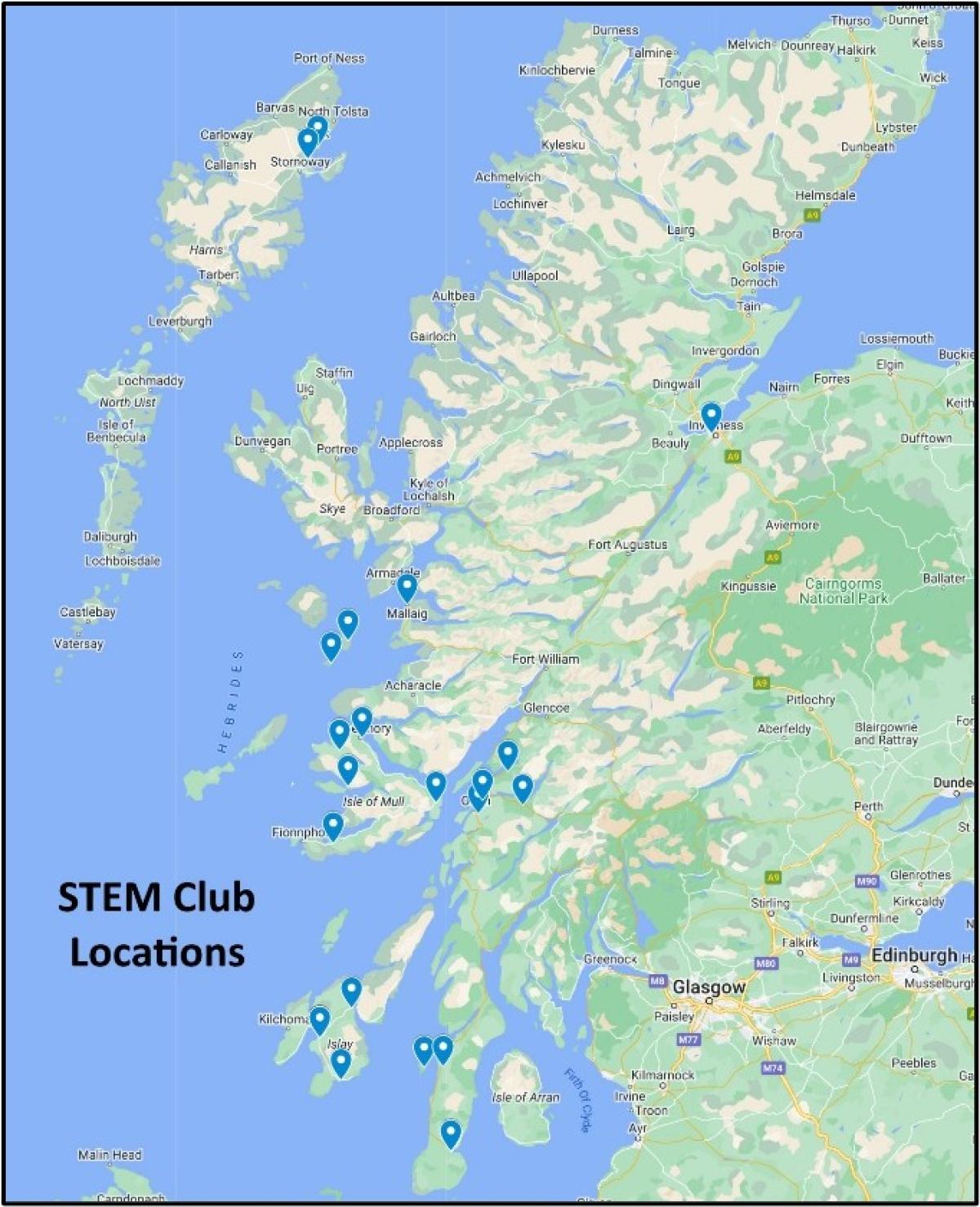 CreditThis work by The Schools' Observatory is licensed under All rights reserved
We are very grateful to STFC for sharing our vision of creating a mobile team to give workshops, talks and activities to schools in remote and island communities. We also thank those communities for their warm welcome and for making our visits so enjoyable. It has been a privilege to share our passion for space and STEM with all who took part.