Measure the Brightness of a Variable Star
Over the past few hundred years, astronomers have discovered thousands of stars whose brightness goes up and down over time. These are known as variable stars. But what causes this to happen?
Bambang Hidayat
Early Life
Bambang Hidayat was born in 1934 in Kudus, Indonesia. He was the oldest of 8 children. He loved the night sky from a young age. He liked to look at stars. He wondered what "shooting stars" were. A book about solar eclipses made him love space even more.
Year born: 1934
Research Areas: Astronomy
"In the performing arts, you must have a prima donna -- in science, you need a prime thinker."
María Teresa Ruiz González
Early Life
Maria was born in Santiago, Chile, in 1946. She fell in love with astronomy after attending a summer school about it. She went on to study astronomy in Chile and was the first person to graduate from this program in 1971. Ruiz earned her PhD in Astrophysics in 1975 and became the first woman to earn a PhD from Princeton.
Career highlights
Maria held a research post at the Trieste Observatory between 1975 and 1976 while doing her PhD. She also worked for two years at the Institute of Astronomy at UNAM in Mexico.
Year born: 1946
Research Areas: Brown Dwarfs, Exoplanets
Legesse Wetro
Early Life
Legesse Wetro was born in Cire, a small town in Ethiopia. In 1967, he started studying physics at Addis Ababa University. There, he joined a Christian student group and enjoyed singing in the church choir. After his first degree in 1972, he stayed to teach physics. But Legesse wanted to learn more. He earned a master's degree from the University of Sheffield, UK, and a PhD in astrophysics from the University of California, US. Through all this time, he also wrote many gospel songs that people still enjoy today.
Year born: 1950
Research Areas: Astrophysics, Pulsars, Geophysics, Magnetic Fields
Enrico Ramirez-Ruiz
Early Life
Enrico Ramirez Ruiz was born and raised in Mexico City. His parents were chemists who worked for the local university. From a young age, he wanted to answer the big questions, such as how the Universe was made.
Year born: ~1975
Research Areas: Stellar explosions, Gamma-Ray Bursts, Black holes, Neutron stars, Gravitational Waves
Víctor Manuel Blanco
Early Life
Víctor Manuel Blanco was born in Guyana on March 10th, 1918. He took an interest in astronomy from a young age. He built a telescope in his backyard and even named his pigs after asteroids!
At first, he was studying to become a doctor, but after taking an astronomy course, he realised he wanted to be an astronomer.
Year born: 1918
Research Areas: Stellar populations
Shi Shen
- Early Life
Shi Shen lived during the 4th century BCE in ancient China. He was born in the state of Wei, which was a strong kingdom during the Warring States period. This was a time when people studied the skies, believing the stars could guide rulers and hold predictions about the future. From an early age, he developed a keen interest in the Sun, Moon, and stars. That curiosity led him to study the night sky, asking big questions about how the Universe worked.
Occupation
Astronomer
Year born
unknown ~4th century BCE
Research Areas
Astronomy, Star Maps, Sunspots
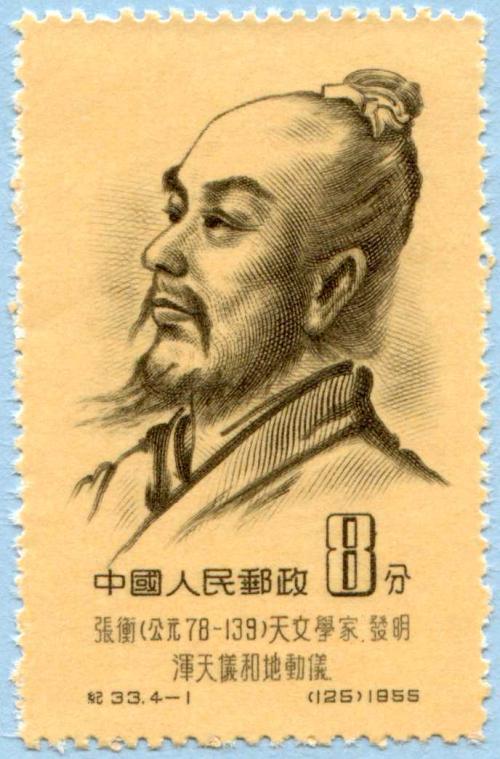
Zhang Heng
Occupation
Astronomer, Mathematician, Geographer, Inventor, Poet
Year Born
78
Research Areas
Star Catalogues, Seismology, Geometry
Al-Battani
Occupation
Astronomer, Mathematician
Year Born
around 858
Research Areas
Stars, Star Maps, Solar and Lunar Motion, Trigonometry
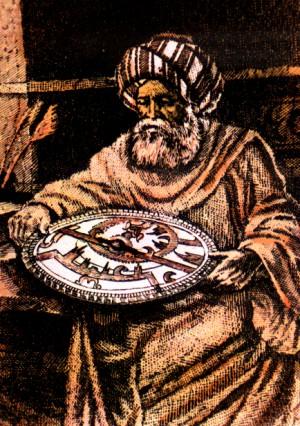
Abd al-Raḥmān al-Ṣūfī
Occupation
Astronomer, Mathematician
Year Born
903
Research Areas
Stars, Star Maps