
Occupation
Astronomer
Year born
unknown ~4th century BCE
Research Areas
Astronomy, Star Maps, Sunspots

- Early Life
Shi Shen lived during the 4th century BCE in ancient China. He was born in the state of Wei, which was a strong kingdom during the Warring States period. This was a time when people studied the skies, believing the stars could guide rulers and hold predictions about the future.
From an early age, he developed a keen interest in the Sun, Moon, and stars. That curiosity led him to study the night sky, asking big questions about how the Universe worked. We don't know much about his family or early schooling, but we do know he shared his passion with another famous observer of the time, Gan De. Together, they helped lay the foundations for Chinese astronomy.
- Career Highlights
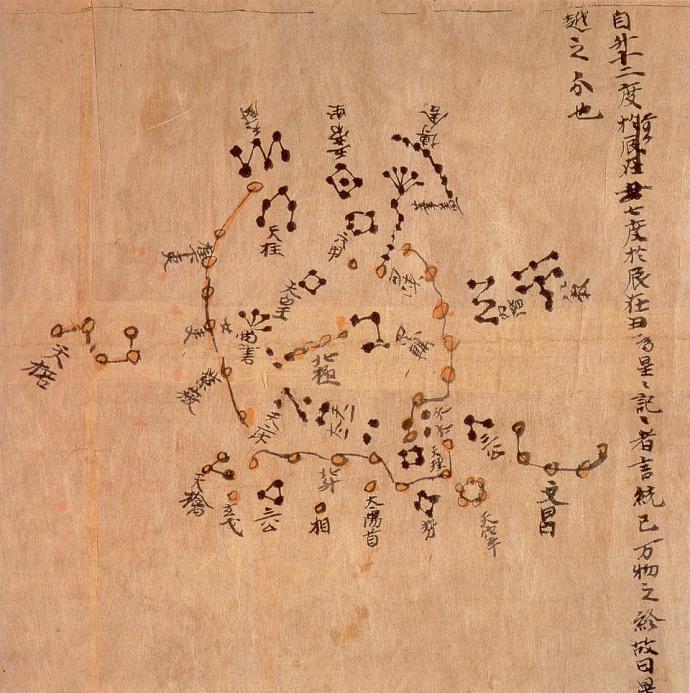
Shi Shen became one of ancient China's most important astronomers. He made detailed observations of the stars, recording the positions of 121 of them. These records became part of what may be the world's oldest surviving star catalogue: the Star Manual of Master Shi. He also created a celestial map and guide called Shi's Classic of Stars. These works used early forms of coordinates, like ancient versions of latitude and longitude, to mark where each star could be found in the sky.
One of Shi's most amazing observations was of a sunspot. Long before telescopes existed, Shi noticed dark spots on the Sun. He thought they were mini-eclipses, which wasn't right, but he was one of the first people in history to realise these spots as natural solar events.
Although many of his books were lost over time, some of his ideas survived in later works, such as the Treatise on Astrology of the Kaiyuan Era. He helped shape how Chinese astronomers saw the sky for thousands of years. People didn't just copy his writings; they also studied them closely. They have been built on over time and shared through generations of astronomers and scholars.
- Legacy
Shi Shen's impact lasted well beyond his life. He played an important role in creating a star system that influenced Chinese astronomy for more than 2000 years. Some of his star groups, like "a chariot for the emperor" or "a celestial toilet", became part of a grand star map that linked the heavens to life on Earth. Ancient Chinese governments even used these star charts to guide rulers and predict natural events, believing that stars held clues about peace, war, and harvests.
Today, a crater on the Moon is named after him, Shi Shen, so his legacy continues in space. Modern studies now suggest his star catalogue is the oldest in the world, dating back to around 355 BCE. That makes Shi Shen not just a figure in Chinese history but a giant in world astronomy.
- Other Interests
While Shi Shen is best known for his work on stars, he was also deeply involved in astrology. At that time, astronomy and astrology were closely linked. People believed that events in the sky could have an impact on life on Earth. Shi studied these patterns to guide leaders and understand unusual events. He likely spent many nights watching the sky, taking careful notes, and discussing ideas with other thinkers.