
Occupation
Astronomer, Monk
Year Born
683
Research Areas
Astronomical Tools, Calendar Reform
- Early Life
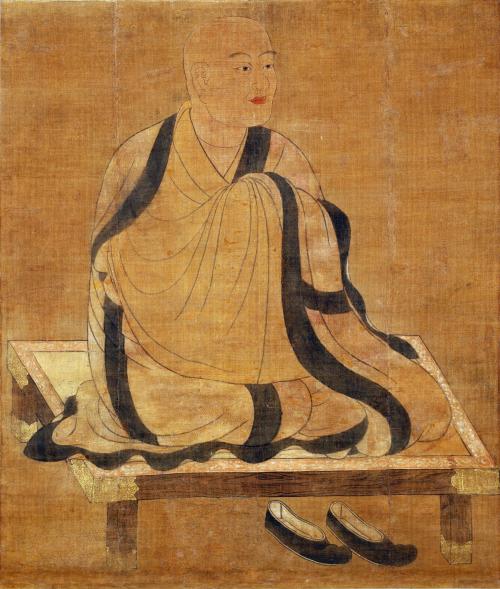
Yi Xing was born in the year 683 during the Tang dynasty in China. His birth name was Zhang Sui. He came from a family of government leaders, which later helped connect him to the imperial court. He was very smart from a young age. He quickly learned classic Chinese books, astronomy, and the calendar.
After his parents died when he was 21, he left regular life and became a Buddhist monk. He took the name 'Yi Xing', which means 'one practice.' Yi Xing travelled across China to learn from Buddhist teachers. He studied meditation and the rules of monastic life. He trained in both Chinese and Indian Buddhist traditions.
People noticed his deep focus and knowledge. Eventually, Emperor Xuanzong invited him to the capital, and Yi Xing became a trusted spiritual guide. He remained loyal to his faith and chose a life of study and service over politics or fame.
- Career Highlights
Yi Xing had a brilliant career combining science and religion. One of his most significant tasks was fixing the calendar. The old system was not accurate enough to predict things like eclipses.
Yi Xing led a huge survey across the empire to collect new data. He set up 13 test stations, from modern Vietnam to near Russia. His team measured star positions and shadows during summer and winter at each site. These results helped improve the calendar and provided better methods for measuring distance on Earth.
Yi Xing also helped build an incredible machine, a celestial globe that showed how the stars and planets moved. It was powered by water and featured the earliest known escapement mechanism, a crucial component of clocks. It even struck bells and drums to mark the time! This globe helped people understand the sky better and inspired many future inventions.
- Legacy
Yi Xing left behind a powerful legacy in both astronomy and Buddhism. In science, he improved the Chinese calendar and helped people better understand the movement of stars. His water-powered celestial globe was a step forward in mechanical design and inspired later inventors in China. Although his globe no longer exists, records show how impressive and accurate it was.
In religion, Yi Xing played a pivotal role in introducing new Buddhist ideas to China. His writings helped shape Esoteric Buddhism, and his influence even reached Japan. Over time, people began to tell legends about him. Some stories said he had magic powers or could control the stars. These tales kept his memory alive.
Today, his tomb and a special memorial pagoda still stand at Mount Tiantai. They remind us of how one person's work in both science and spirit can last for centuries.
- Other Interests
Besides astronomy and Buddhism, Yi Xing was curious about many things. He studied ancient Chinese books, such as the Yijing, also known as the Book of Changes, which deals with numbers, patterns, and nature. He also wrote about monastic rules, although many of his writings are now lost.
Yi Xing enjoyed solving complex problems. For example, he once calculated the number of possible positions on a Go board, which is a game with many combinations, even though he didn't have a zero in the number system.